Bridging to Stop Repossession: Lifeline or Financial Suicide?
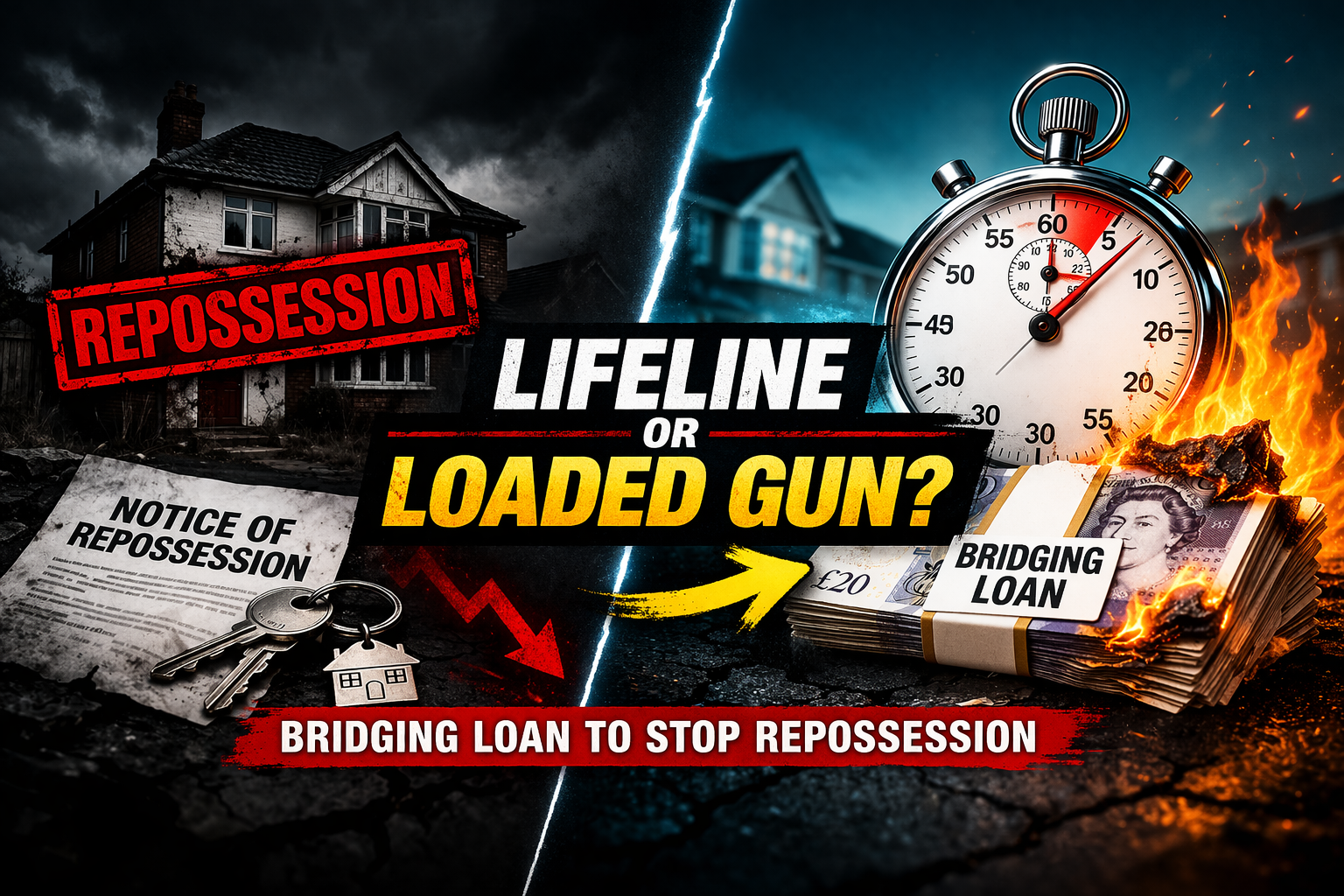
A bridging loan won’t save your property.
It buys you time — at 1%+ per month — to either fix the problem… or make it worse, faster.
The Reality Nobody Wants to Admit
When a repossession letter lands, most people panic.
They don’t build a plan — they grab the fastest money available and call it a solution.
That’s where bridging comes in.
Fast. Flexible. Expensive.
But here’s the part nobody tells you straight:
Bridging is speed — not salvation.
If you don’t have a real exit (sale or refinance you can actually deliver), you’re just swapping one problem for a bigger one.
One lender chasing you → now two
Arrears → plus interest, fees, and deadlines
Stress → multiplied
And that “we’ll refinance later” plan?
In this market — with arrears, missed payments, or a messy credit file — it’s often fantasy.
Most lenders want:
clean credit
stable income
track record
If you don’t have that, your real exit is usually one thing:
👉 Sell the property.
What Actually Happens (No-BS Breakdown)
Speed
Yes — bridging can complete in 5–15 working days.
But:
Legal delays kill deals
Court dates don’t wait
Bailiffs don’t care about your broker
👉 If you’re late — bridging won’t save you.
Cost
That “from 0.99% per month” headline?
That’s for perfect deals.
If you’re in trouble:
Expect 1.1% – 1.6% per month
That’s 13%–20%+ annually
Before fees.
Hidden Damage
Here’s where people get burned:
Arrangement fees (1–2%)
Broker fees
Legal fees (both sides)
Exit fees
Default interest if things slip
👉 You’re not buying time cheaply — you’re renting it at a premium.
The Brutal Truth
A repossession is bad.
A failed bridging loan + repossession?
That’s worse.
You’ve:
delayed the inevitable
increased your debt
damaged your credit further
And now you’ve got even less room to recover.
When Bridging Actually Makes Sense
There are cases where it works:
You already have a serious buyer lined up
The property is priced to sell fast
Title is clean, no legal mess
You’ve got a clear, realistic timeline
👉 Then bridging is a tool.
Not a gamble.
When It’s a Terrible Idea
Be honest with yourself.
If this is you:
“I’ll refinance later somehow”
“The market will pick up”
“I just need more time”
You’re not solving the problem.
You’re delaying it — at a cost you can’t afford.
What You Should Do Instead
If you’re facing repossession:
Get real on numbers — today
Speak to a broker who isn’t selling you hope
Price for a fast sale, not a perfect one
Protect what equity you still have
Because once it’s gone — it’s gone.
Bottom Line
Bridging can save a deal.
It rarely saves a bad situation.
👉 If your exit isn’t solid, bridging isn’t a strategy.
It’s a countdown.
If you’re in this situation — or heading towards it — don’t guess.
Drop me a message or book a call.
I’ll tell you straight what your real options are.